
LanguageCert Academic
LanguageCert Academic Speaking Part 2: Role Play Task Format, Scoring, and Strategies
LanguageCert Academic Speaking Part 2 tests your ability to handle real conversations in academic settings. …

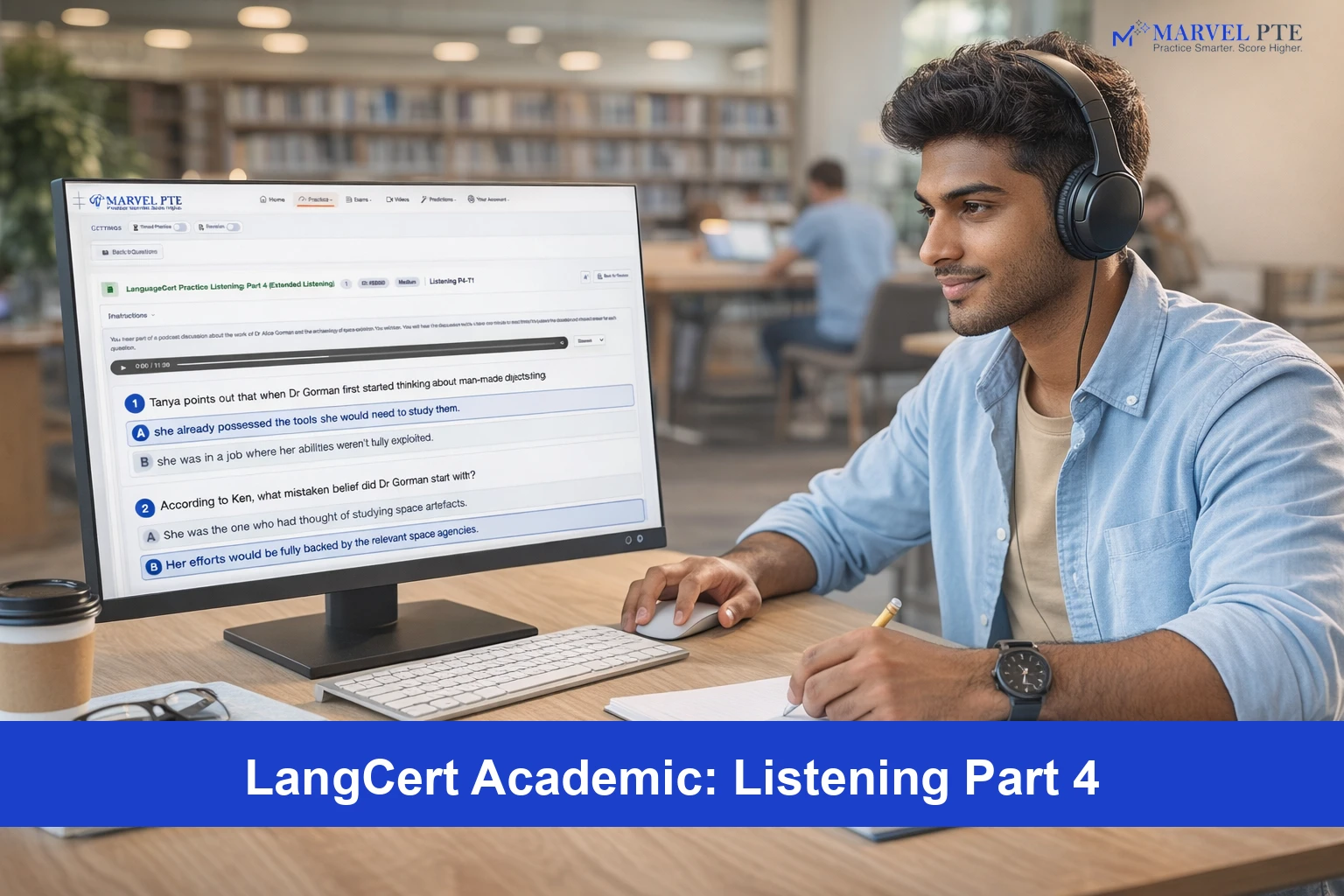
LanguageCert Academic Listening Part 4 is the final and most demanding part of the Listening section. With 6 multiple-choice questions based on an extended podcast discussion featuring multiple speakers, this part tests your ability to follow complex conversations, track who said what, and understand the nuances of agreement and disagreement.
I worked with a student who breezed through Parts 1, 2, and 3 but consistently lost marks in Part 4. Her issue? She could not track which speaker held which opinion. When a question asked “What does Speaker B think about the proposal?”, she would choose an answer that reflected Speaker A’s view. Once she started mentally labelling speakers during the audio, her accuracy improved significantly.
This guide covers exactly how Part 4 works, the question types you will face, proven strategies for tracking multiple speakers, and how to use your preparation time and double playback effectively. Whether you are preparing for Australian immigration or university admission, mastering Part 4 is essential for maximising your Listening score.
Part 4 is the final part of the LanguageCert Academic Listening section. You will hear a podcast-style discussion or academic debate featuring three or more speakers. Topics are academic in nature, covering subjects like technology, education, environmental issues, or social trends.
| Aspect | Details |
|---|---|
| Question Count | 6 (questions 25 to 30) |
| Options per Question | 3 (A, B, C) |
| Audio Type | Podcast or group discussion |
| Number of Speakers | 3 or more |
| Preparation Time | 1 minute |
| Audio Playback | Twice |
| Marks per Question | 1 |
The official instruction reads: “You will hear a podcast discussion on the subject of [topic]. You will hear the discussion twice. Choose the correct answers. You have one minute to read through the questions.”
Part 4 is more challenging than earlier parts because you must track multiple perspectives simultaneously. Unlike Part 2 where conversations involve just two speakers, Part 4 features three or more voices that may agree, disagree, or present nuanced middle-ground positions.
Listen to exam-style podcast audio and test your comprehension.
Each Part 4 question asks about specific aspects of the discussion. Questions typically focus on:
Here is how the task unfolds:
Questions follow the order of the discussion. If question 25 relates to something discussed early in the podcast, question 30 will relate to something discussed near the end.
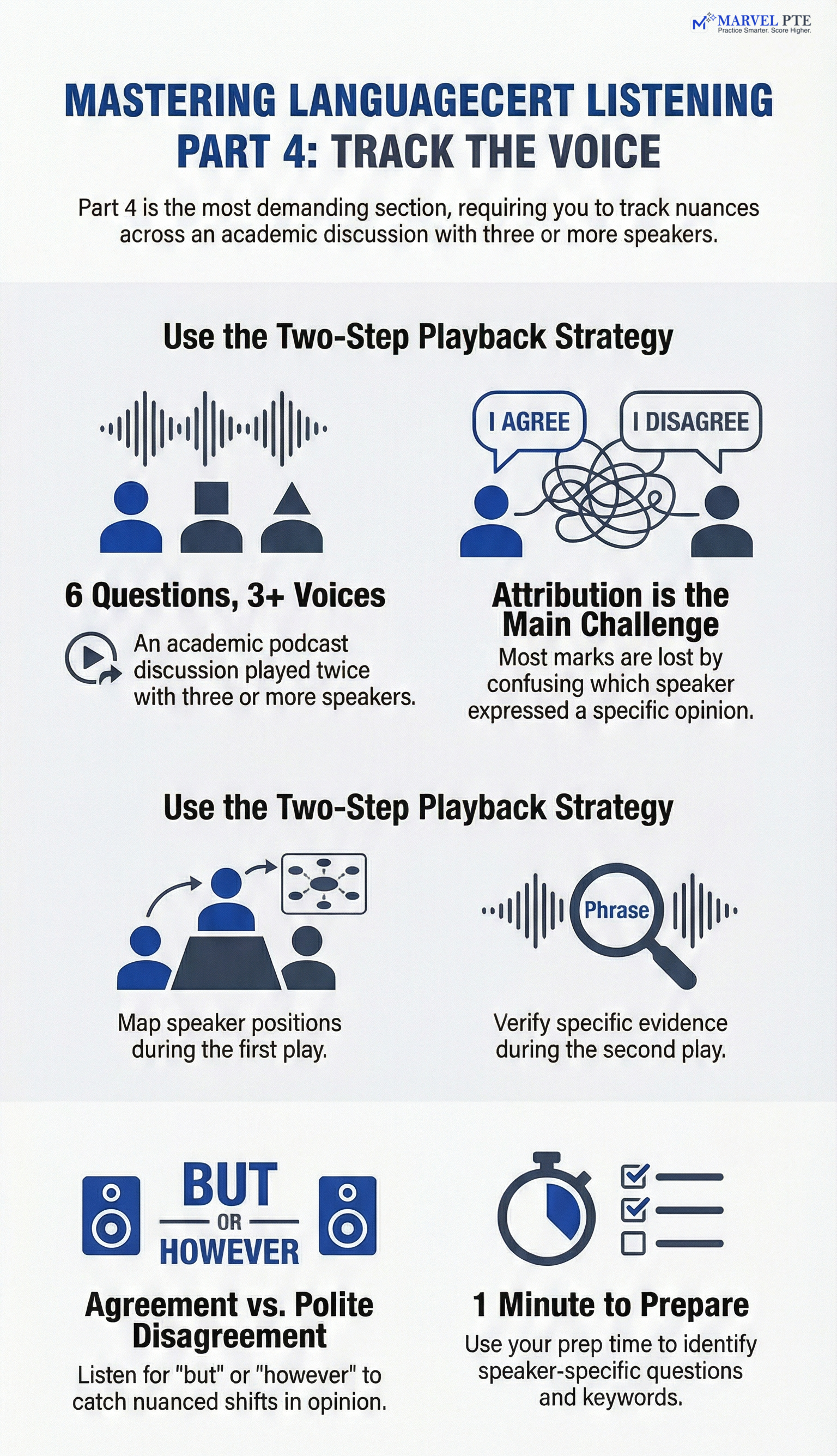
The main difficulty in Part 4 is keeping track of who says what. A question might ask: “What does the second speaker think about artificial intelligence in education?” If you confuse the second speaker with the third speaker, you will select the wrong answer even if you understood the content perfectly.
During your 1 minute preparation time, look for questions that reference specific speakers. Note whether questions ask about “the woman”, “the man”, “the first speaker”, or use other identifiers. This tells you what to listen for during the audio.
Take a mock Part 4 section under real exam conditions.
Scoring in Part 4 follows the same straightforward rules as the rest of the Listening section:
| Scoring Rule | Details |
|---|---|
| Correct Answer | 1 mark |
| Wrong Answer | 0 marks |
| No Answer | 0 marks |
| Partial Credit | Not available |
| Negative Marking | None |
There is no penalty for guessing. If you are unsure between two options, eliminate the one that seems least logical and commit to your choice. Leaving questions blank never helps your score.
Part 4 contributes to your overall Listening score, which is reported separately from Reading, Writing, and Speaking. LanguageCert uses standalone scoring, so your Listening performance does not affect your other skill scores.
Consider this simplified example from a discussion about remote work:
Audio excerpt: Three speakers discuss remote work. Speaker A argues that remote work increases productivity. Speaker B disagrees, citing distractions at home. Speaker C suggests a hybrid model combines the benefits of both approaches.
Question: “What does Speaker C suggest?”
Options:
The correct answer is B. Speaker C specifically advocated for a hybrid model. Option A reflects the opposite of what any speaker said. Option C reflects Speaker A’s view, not Speaker C’s.
Test writers use several techniques to create attractive but incorrect options:
Access our full Part 4 question bank with transcripts and answers.
Part 4 evaluates several advanced listening abilities:
Following extended discussions: Unlike short dialogues, Part 4 features sustained academic conversation that develops arguments over several minutes. You must maintain concentration throughout.
Tracking multiple speakers: With three or more voices, you need to mentally label each speaker and remember their positions. This is the skill that trips up most candidates.
Understanding opinions and attitudes: Questions often ask what speakers think or feel, not just what they say. You must recognise signals of agreement, disagreement, enthusiasm, scepticism, and neutrality.
Identifying main arguments: Beyond individual opinions, you may need to identify the overall conclusion or consensus reached by the group.
Recognising nuance: Speakers in academic discussions rarely take black-and-white positions. They may partially agree, agree with qualifications, or acknowledge merits in opposing views. Recognising these nuances is essential.
Your preparation time is longer than in other parts because you have more questions to preview. Use it wisely:
Do not try to memorise every question word-for-word. Your goal is to know what kind of information to capture, not to recall exact phrasing.
The first playback is for understanding the overall discussion:
Many students try to answer every question during the first playback. This approach usually backfires because you miss later content while thinking about earlier questions.
Now you know the discussion structure and speaker positions. Use the second playback to:
The second playback is your verification opportunity. Answers that seemed unclear the first time often become obvious the second time because you know exactly when the relevant content appears.
Pro Tip: If a question asks about a specific speaker, focus on that speaker’s voice during the second play. Filter out the other voices temporarily.
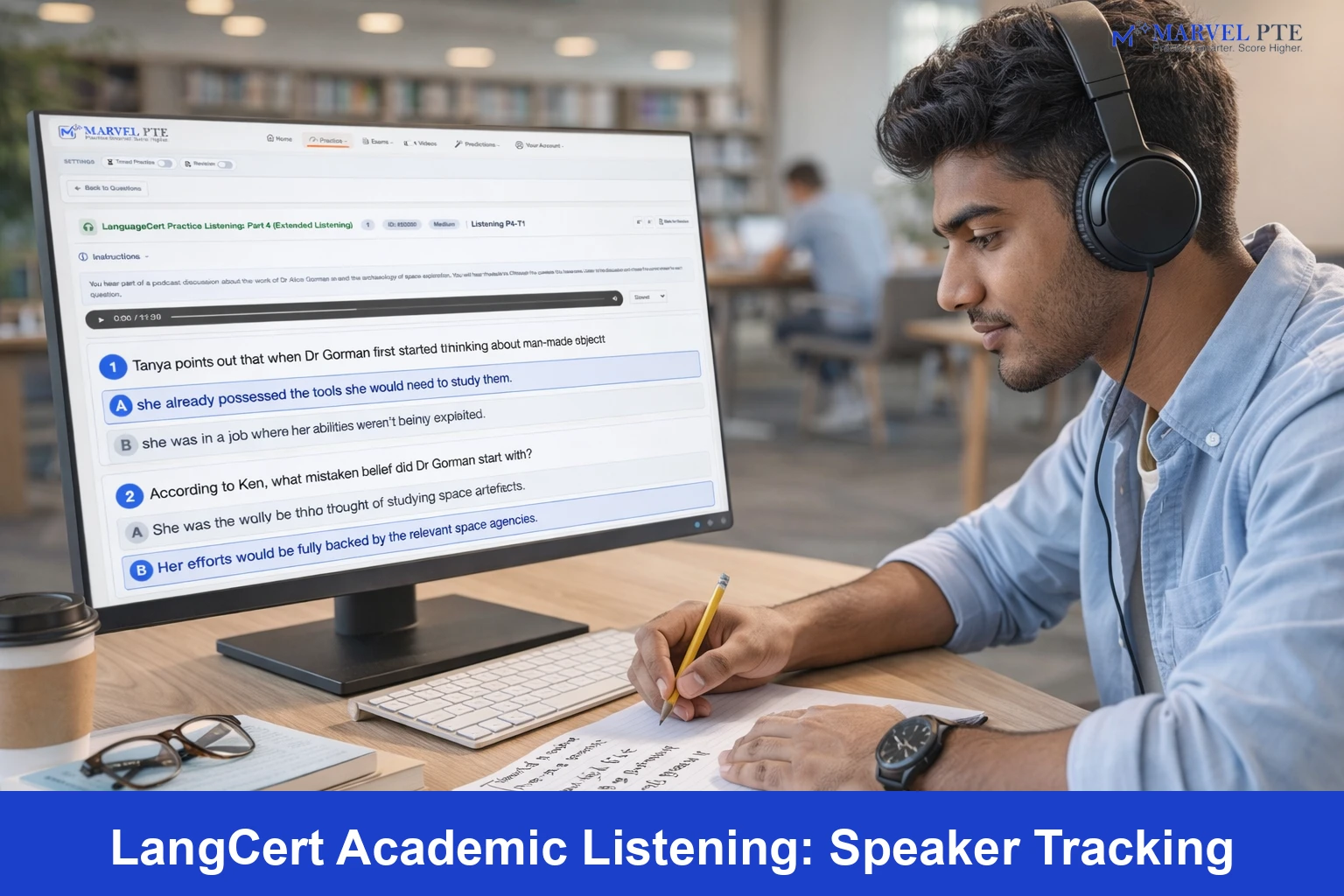
Part 4 has several pitfalls that cost students marks:
This is the most common error. You understand what was said but attribute it to the wrong person.
Fix: During the first playback, mentally assign labels to each speaker (Speaker A, B, C or Man 1, Woman, Man 2). When you hear a key opinion, note which speaker expressed it.
An option might contain something genuinely mentioned in the discussion but leave out a crucial qualification. For example, if a speaker says “Technology can help, but only when properly implemented”, an option stating simply “Technology is helpful” is technically incomplete.
Fix: Listen for qualifiers like “but”, “however”, “although”, and “unless”. These signal that a simple statement is about to become more nuanced.
Speakers may use polite language that masks disagreement. Phrases like “I see your point, but…” or “That’s interesting, however…” often signal disagreement rather than agreement.
Fix: Listen to what follows polite acknowledgements. The word “but” often reverses the apparent meaning of what came before it.
You might understand what a speaker says but misread their attitude. Sarcasm, cautious approval, and reluctant agreement can all be mistaken for straightforward endorsement.
Fix: Pay attention to tone of voice and stress patterns. A speaker who says “That’s an interesting approach” with falling intonation and flat delivery may be expressing scepticism rather than genuine interest.
Part 4 requires careful pacing across your preparation and both playbacks:
| Phase | Time | Priority |
|---|---|---|
| Preparation | 1 minute | Read all questions, identify speaker references |
| First Playback | ~5-6 minutes | Map speaker positions, tentative answers |
| Between Playbacks | Brief pause | Quick review of what you captured |
| Second Playback | ~5-6 minutes | Confirm and finalise all answers |
| Final Review | 20-30 seconds | Check for any missed questions |
The discussion is longer than audio in earlier parts, so stay focused throughout. If you zone out during the middle, you may miss content relevant to questions 27 or 28.
Important: Do not dwell on difficult questions during the first playback. Note them for special attention during the second playback and keep following the discussion.
Yes, within the Listening section you can go back and change your answers. This is a significant advantage over PTE, where once you move to the next question, you cannot return.
You can edit answers:
Once you move to the Writing section, Listening and Reading are locked. A 15 minute warning appears to remind you to review any flagged answers before time runs out.
If you have time after the second playback, review your Part 4 answers specifically for:
Change answers only if you have a clear reason. Random second-guessing often turns correct answers into wrong ones.
Part 4 is structurally different from Parts 1, 2, and 3:
| Feature | Part 1 | Part 2 | Part 3 | Part 4 |
|---|---|---|---|---|
| Questions | 7 | 10 | 7 | 6 |
| Audio Type | Short dialogues | Conversations | Lecture | Podcast/discussion |
| Speakers | 2 | 2 | 1 | 3+ |
| Question Type | MCQ (3 options) | MCQ (3 options) | Gap-fill | MCQ (3 options) |
| Prep Time | Brief | Brief | 30 seconds | 1 minute |
| Main Challenge | Dialogue completion | Following conversations | Note accuracy | Speaker tracking |
If you found Parts 1, 2, and 3 manageable, Part 4 requires additional focus:
The good news is that you still hear the audio twice, and you can still review your answers within the section.
Tracking multiple speakers in extended discussions requires specific practice. Marvel Edu provides:
| Feature | Benefit |
|---|---|
| Podcast-style practice discussions | Authentic multi-speaker audio |
| Speaker identification exercises | Train your ear to distinguish voices |
| Double playback matching exam conditions | Practice exactly as the real test works |
| AI feedback on answer patterns | Understand why you chose wrong speakers |
| Progress tracking for Part 4 specifically | See improvement over time |
Our platform replicates the actual test experience with discussions featuring three or more speakers on academic topics. The AI feedback is particularly helpful for Part 4 because it identifies whether your errors are due to speaker confusion, partial information traps, or other patterns.
Before test day, confirm you can answer yes to these questions:
If you are taking LanguageCert for Australian immigration, here are the Listening scores you need:
| Level | Listening Score | PR Points |
|---|---|---|
| Competent | 57 | 0 |
| Proficient | 67 | 10 |
| Superior | 80 | 20 |
Competent level meets the minimum English requirement but does not add points. Proficient adds 10 points, and Superior adds 20 points to your Expression of Interest.
Listening Part 4 is about tracking people, not just content. The double playback gives you time to understand who holds which opinion during the first play, then verify your understanding during the second. Speaker confusion is the main source of lost marks.
With the right strategy and targeted practice using Marvel Edu, Part 4 becomes a manageable conclusion to the Listening section rather than an intimidating finale. Focus on speaker identification, trust the double playback, and use your 1 minute preparation time to understand what each question is really asking.
The LanguageCert Listening Part 4 format differs significantly from other English language tests. While PTE Academic uses computer-based scoring with single playback audio, the LanguageCert test gives you the advantage of hearing each recording twice. This makes the LanguageCert exam particularly accessible for candidates who need extra time to process spoken English.
When comparing the LanguageCert Academic test to other secure English language tests accepted for Australian immigration, the listening section stands out for its structured approach. The exam format allows you to review and change answers within the section, unlike many other English proficiency tests where answers are locked immediately.
Test results for LanguageCert Academic are typically available within 3 business days, faster than many competing English language requirement assessments. Your test result includes a detailed breakdown of performance across all four skills, helping you understand exactly where you excelled and where you need improvement.
Practice tests and practice papers are essential for LanguageCert Listening Part 4 preparation. Regular exposure to multi-speaker discussions helps develop the language skills needed to track opinions across extended conversations. Focus on distinguishing between speakers with similar voices and identifying subtle shifts in agreement or disagreement.
The Common European Framework of Reference provides the scoring structure for LanguageCert Academic. Test takers receive scores mapped to CEFR levels from B2 to C2, with specific score thresholds determining whether you meet English language proficiency requirements for visa applications.
Many learners transitioning from other English tests find LanguageCert Listening easier because of the double playback feature. Whether you previously attempted IELTS Academic, Cambridge English qualifications, or TOEFL iBT, the LanguageCert listening format offers a different approach that may suit your learning style better.
For online exam preparation, ensure your equipment meets the technical requirements for remote proctored testing. A stable internet connection, working microphone, and quiet environment are essential for completing the LanguageCert test successfully from home.
Understanding the integrated skills nature of real conversations helps with Part 4. Speakers naturally combine listening and speaking patterns, referencing earlier points and building on each other’s arguments. Recognising these conversational patterns improves your ability to track complex academic discussions.
LanguageCert is recognised as an approved secure English language test for Australian visa applications. This English test assesses all four language skills through listening, reading, writing, and speaking components. Each section evaluates different aspects of your English language skills and contributes to your overall CEFR level.
The practice paper approach works well for Part 4 preparation. Working through official sample materials helps you understand how questions are structured and what examiners expect. Combine practice papers with timed simulations to build both accuracy and confidence under pressure.
Your language skill development should focus on academic vocabulary and discourse markers commonly used in group discussions. Phrases like “I tend to agree”, “That raises an interesting point”, and “On the other hand” signal how speakers position themselves relative to others in the conversation.
LanguageCert General qualifications focus on everyday English, while LanguageCert Academic targets university and immigration contexts. For Australian PR applications, you need the Academic version, which includes more complex listening passages like the Part 4 podcast discussions.
Students often ask about the C2 proficiency level and whether it is required for immigration. The answer depends on your visa subclass. Most skilled worker visas require scores equivalent to CEFR B2, which LanguageCert Academic can certify. Higher scores demonstrate Superior English and earn additional PR points.
What is the primary challenge that distinguishes Part 4 from the earlier parts of the LanguageCert Listening test?
How should a test-taker best use the 1-minute preparation time before Part 4 begins?
What is a common 'distractor trap' in Part 4 questions?
During the first playback of the Part 4 audio, what should candidates prioritise?
Which score is required in the LanguageCert Academic Listening section to achieve 'Proficient' level for Australian immigration?
How many questions are in LanguageCert Academic Listening Part 4?
6 questions (questions 25 to 30).
How many answer options are provided for each question in Part 4?
3 options (A, B, C).
What type of audio is used in Part 4?
A podcast-style discussion or debate with 3 or more speakers.
How much preparation time is given before the Part 4 audio starts?
1 minute.
How many times does the audio play in Part 4?
Twice.
What core skill is primarily tested in Part 4?
Tracking multiple speakers and understanding their opinions, agreements, and disagreements.
Is there negative marking for wrong answers in Part 4?
No, there is no penalty for wrong answers.
Can you revisit Part 4 questions after answering them?
Yes, within the Listening section. Once you move to Writing, you cannot return.
What is a common distractor trap in Part 4?
An opinion attributed to the wrong speaker, or partial information that sounds correct but is incomplete.
How many marks is each correct answer worth in Part 4?
1 mark per correct answer.
Watch expert strategies for following multiple speakers.

LanguageCert Academic Speaking Part 2 tests your ability to handle real conversations in academic settings. …
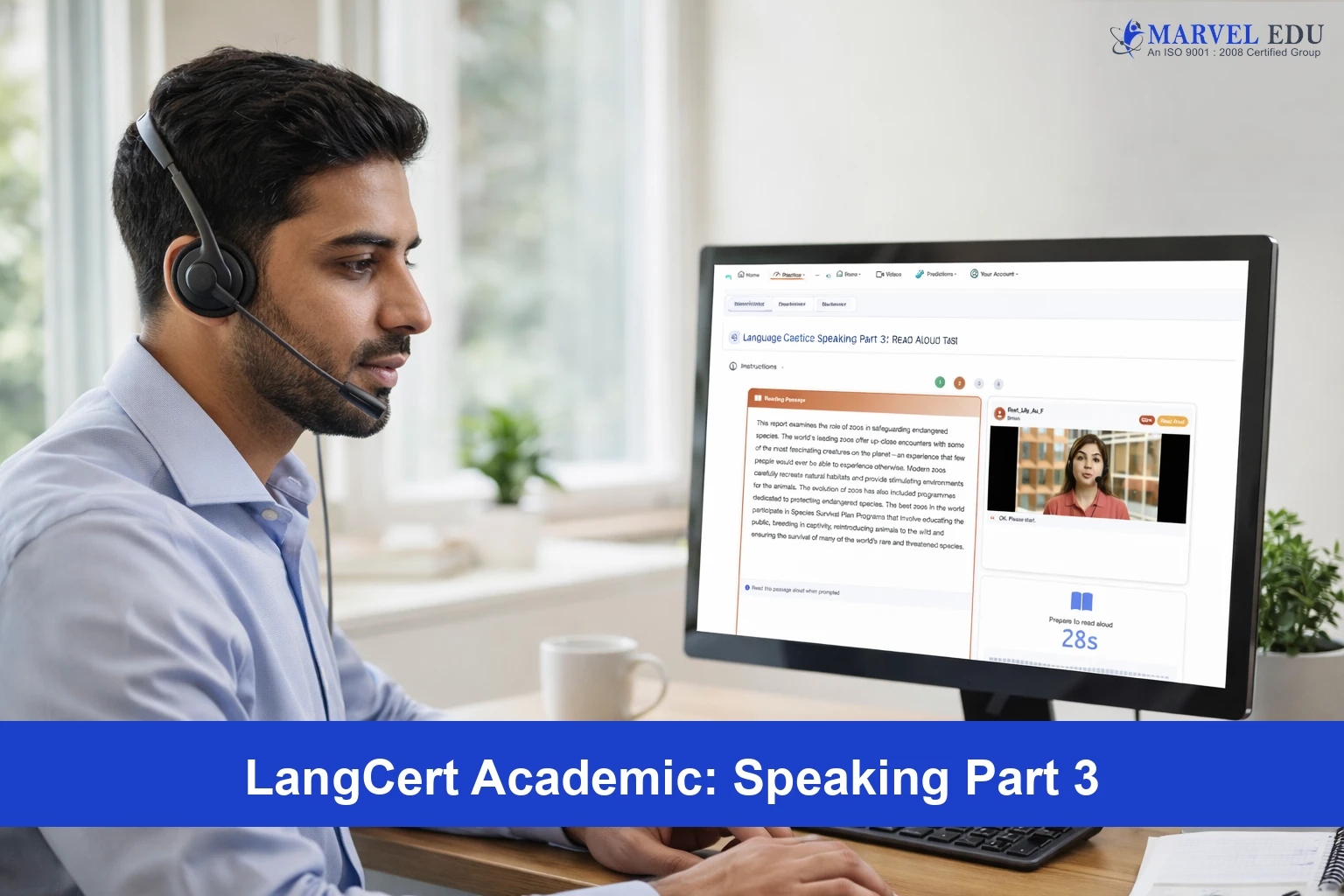
LanguageCert Academic Speaking Part 3 tests two skills in one task: reading aloud and expressing an opinion. …

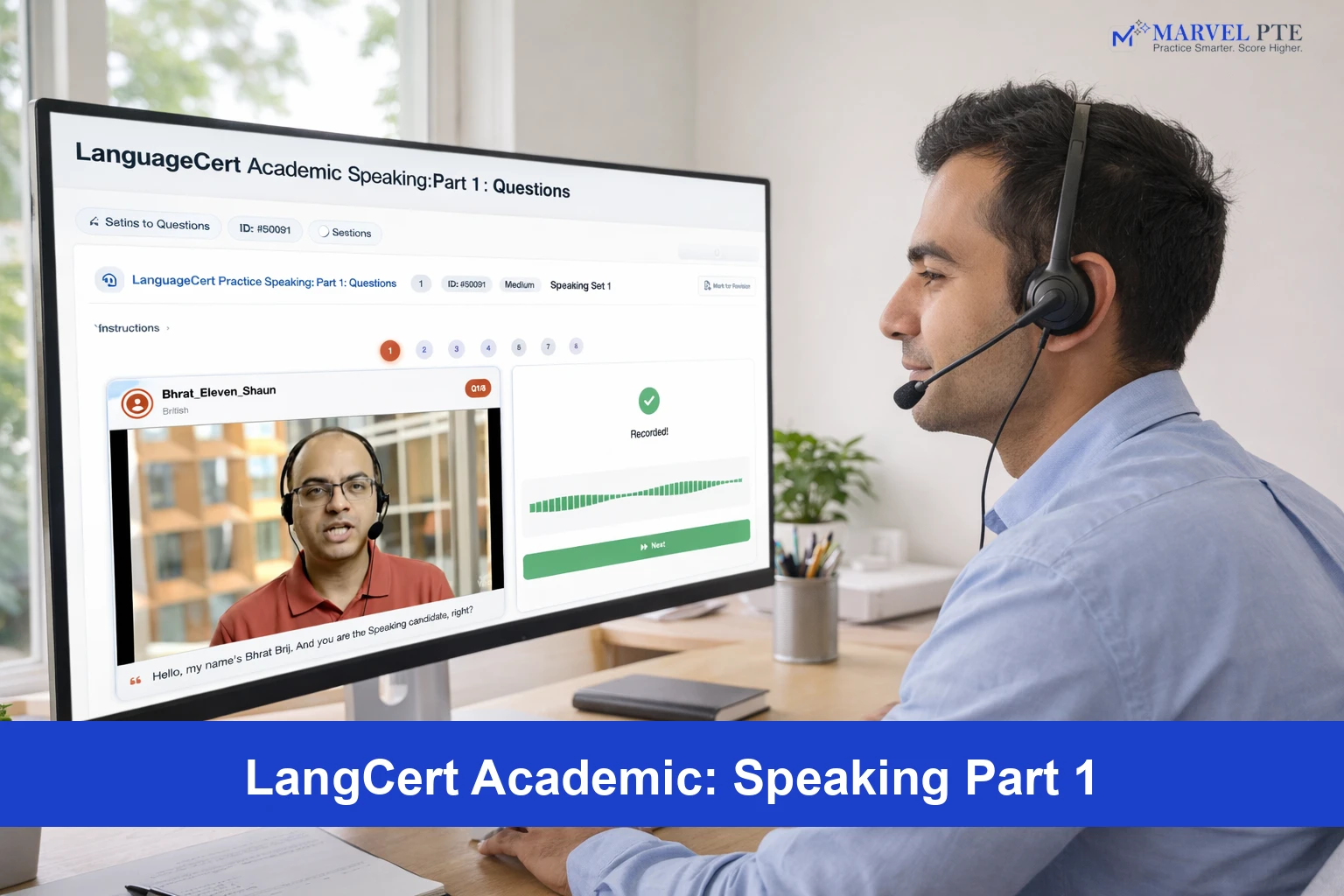
LanguageCert Academic Speaking Part 1 is the opening section of the speaking test, where the examiner asks you …
