LanguageCert Academic
LanguageCert Academic Speaking Part 2: Role Play Task Format, Scoring, and Strategies
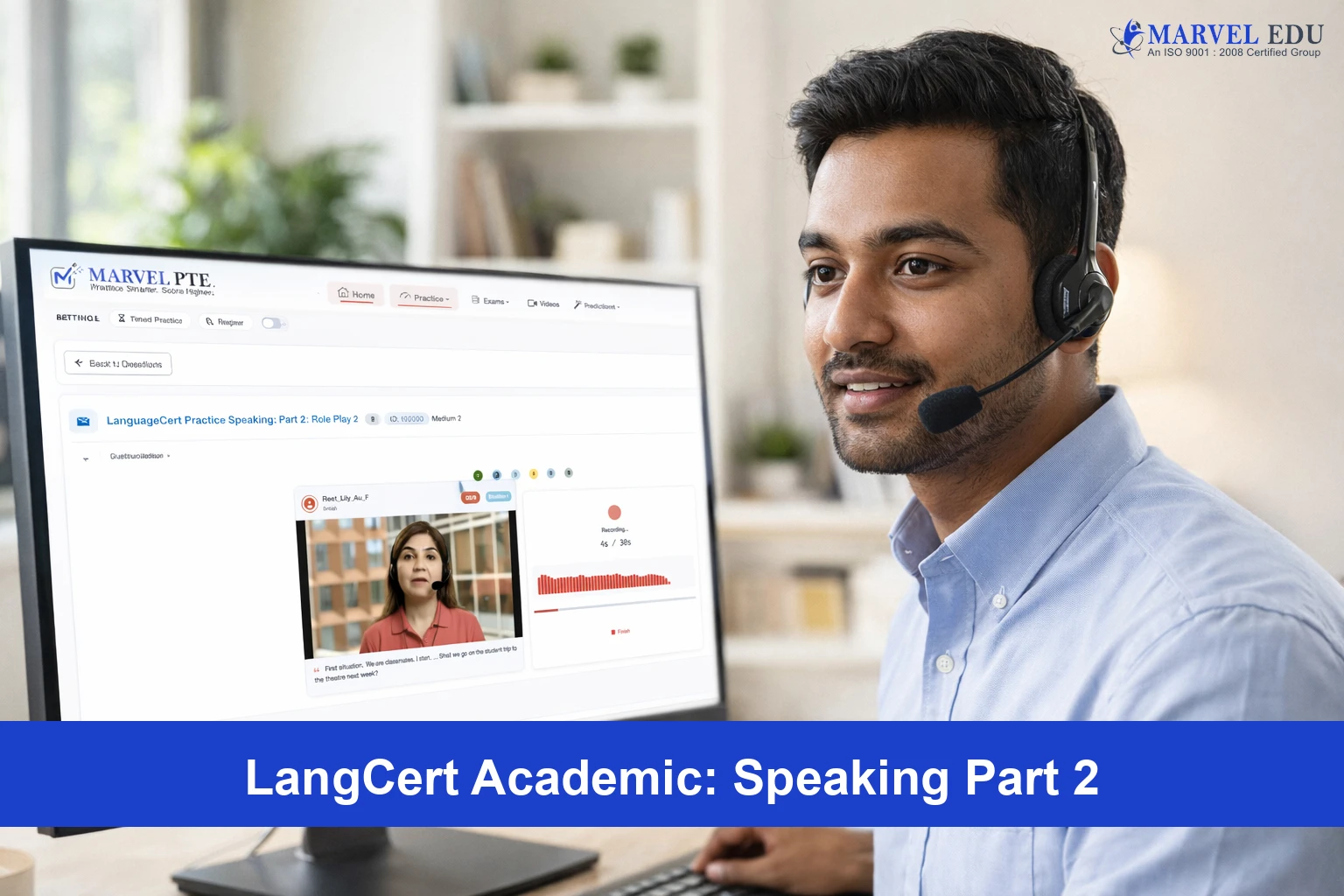
LanguageCert Academic Speaking Part 2 tests your ability to handle real conversations in academic settings. …

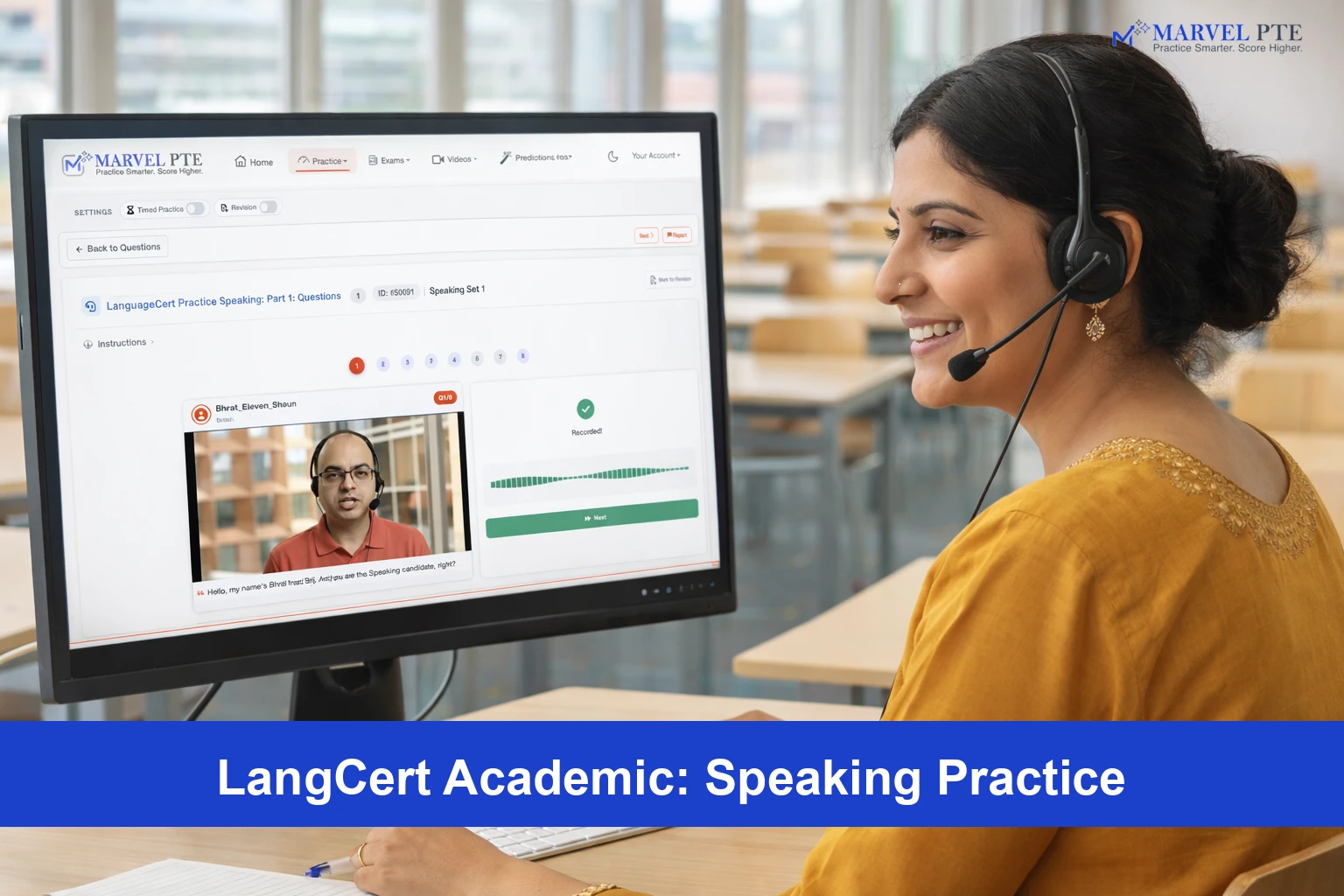
The LanguageCert Academic Speaking test takes 14 minutes and is conducted via live video call with a human examiner. Unlike PTE, where an AI algorithm scores your responses, LanguageCert uses real examiners who understand context, intent, and natural speech patterns. This makes it a preferred choice for many test takers who find AI-scored speaking tests stressful.
If you are preparing for Australian permanent residency or a student visa, understanding how this section works will help you approach it with confidence. This guide covers the format, scoring criteria, and why many find LanguageCert Speaking easier than alternatives like PTE and IELTS.
The LanguageCert Academic is a SELT exam approved for UK visa applications and Australian immigration. As an English language test, it measures your English proficiency across listening, reading, writing, and speaking. Unlike PTE Academic where AI algorithms assess speaking performance, LanguageCert tests use human examiners who evaluate your language skills directly.
The qualification handbook for LanguageCert International ESOL exams outlines how assessing speaking performance differs from written exam components. Each section of the exam tests different language skills, and your speaking performance contributes to demonstrating your overall English language proficiency. The spoken exam format specifically tests your ability to communicate in real conversations.
Test takers preparing for the LanguageCert test often find practice papers helpful for exam preparation. Official practice papers and practice tests give you exposure to the exam format before your actual exam day. Whether you need English proficiency for education purposes or visa requirements, preparation tips from experienced test takers can improve your readiness.
Practice with realistic speaking scenarios and get feedback on your responses.
The Speaking section is the final part of the LanguageCert Academic exam. It lasts 14 minutes and happens via live video call with an interlocutor.
| Feature | Details |
|---|---|
| Duration | 14 minutes |
| Format | Live video call |
| Examiner | Human interlocutor |
| Parts | 4 |
| Scoring | Human (not AI) |
| Separate scheduling | Yes (within 14 days) |
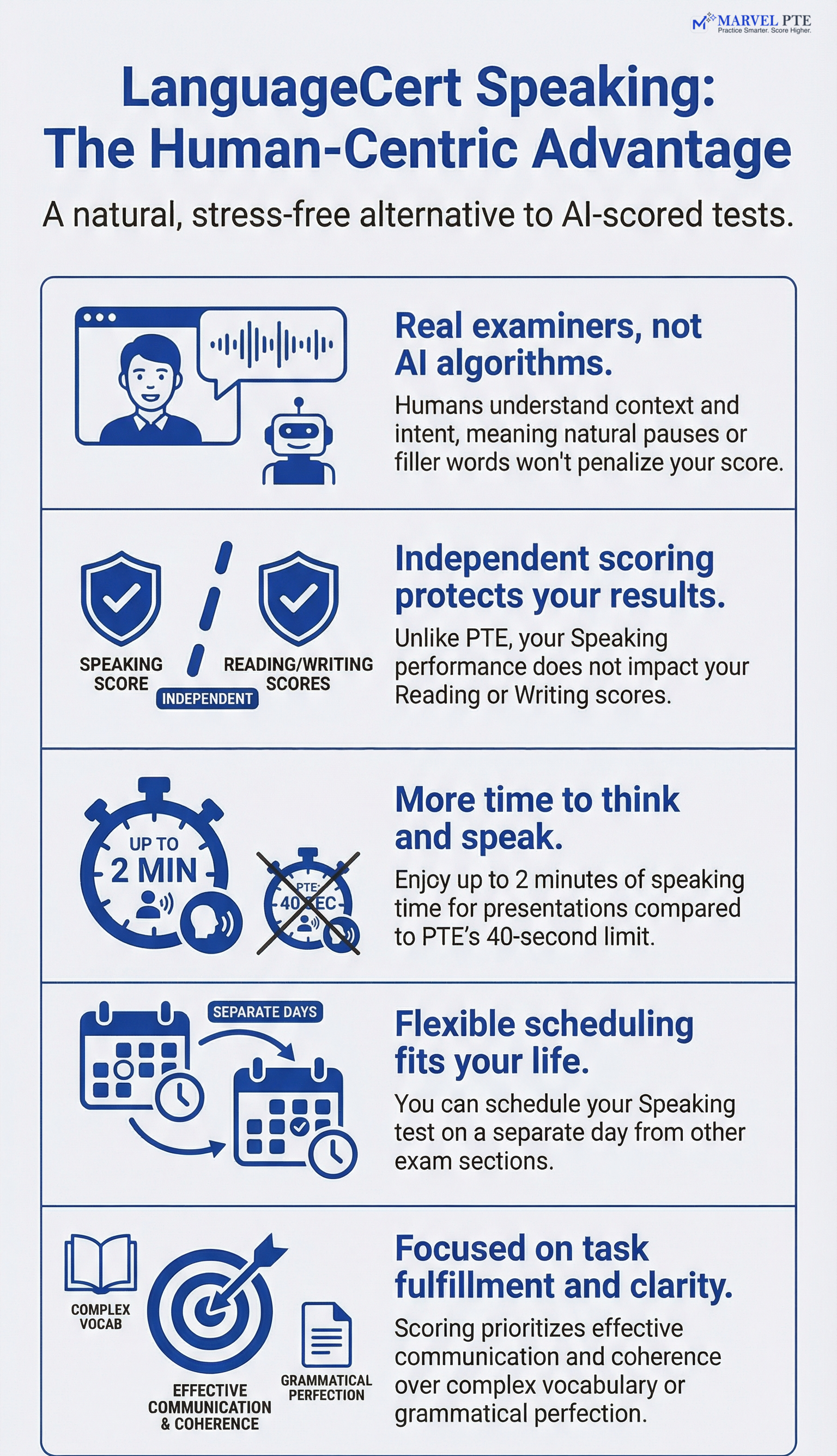
One significant advantage is that your Speaking score does not affect other sections. In PTE, speaking performance contributes to your Listening score through integrated scoring. LanguageCert keeps each section independent, so a nervous moment in Speaking will not drag down your Reading or Writing results.
You can also schedule Speaking on a different day from the other sections, as long as all parts are completed within a 14-day window. This flexibility helps if you prefer to focus on one skill at a time.
Experience the full 14-minute speaking test under exam conditions.
The test begins with simple, everyday questions about familiar topics. The examiner asks about your name, country of origin, and then moves to up to five questions covering areas like work, study, hobbies, or daily routines.
This section is considered easy because:
A student I worked with in Parramatta was nervous about speaking tests after failing PTE twice. Within the first minute of Part 1, she realised the examiner was simply having a conversation. No countdown timer. No robotic voice analysis. Just a person asking about her weekend plans.
You participate in two interactive role plays based on academic-related scenarios. The examiner presents a situation and you respond naturally, then initiate conversation as required.
What makes this section approachable:
Unlike scripted responses for PTE’s Respond to Situation, you are having an actual back-and-forth exchange with a human who adapts to your responses.
You receive a short academic text, get 30 seconds to prepare, then read it aloud. The examiner may ask follow-up questions about the content.
The emphasis is on:
Unlike PTE Read Aloud where you speak immediately as the timer starts, you have preparation time. The human examiner also understands that reading style varies and does not penalise minor hesitations the way an algorithm might.
This is the extended speaking task. You receive a topic stimulus, get 1 minute to prepare, then speak for up to 2 minutes. The examiner may ask follow-up questions.
Compare this to PTE’s Describe Image:
The extra time makes a significant difference. You can develop your ideas, provide examples, and structure your response properly rather than rushing through key points.
Many test takers find LanguageCert Speaking more manageable than PTE or IELTS. Here is why:
No AI penalties for natural speech patterns
PTE’s AI can penalise pauses, filler words like “um” or “well”, and non-native accents. LanguageCert’s human examiner understands that natural speech includes hesitation markers and thinking time.
Human examiner understands meaning and intent
If you use a slightly unusual phrase but communicate your meaning clearly, a human recognises this. An AI might flag it as an error. The examiner assesses communicative effectiveness, not just grammatical accuracy.
More time to think and respond
Across all four parts, you have more breathing room. The 1-minute prep for Presentation versus PTE’s immediate response requirement is one example. Even in the Q&A section, there is no visible countdown creating pressure.
Natural conversation reduces anxiety
Speaking to a person who nods, reacts, and occasionally smiles is different from speaking into a microphone while staring at a progress bar. The interactive format feels less clinical.
Access our full library of Q&A, Role Play, Read Aloud, and Presentation tasks.
Your Speaking performance is scored out of 100 by human examiners. The interlocutor awards marks for Task Fulfilment in real time, while a second examiner reviews the recording for other criteria.
| Criterion | Description | Weighting |
|---|---|---|
| Task Fulfilment | Completing tasks and communicating effectively | Double-weighted |
| Coherence | Linking ideas logically across extended speech | Standard |
| Grammar | Accuracy and range of grammatical structures | Standard |
| Vocabulary | Accuracy and range of lexis and register | Standard |
| Pronunciation | Production of sounds with appropriate stress and intonation | Standard |
For Australian permanent residency, these are the Speaking score requirements:
| Level | Score | PR Points |
|---|---|---|
| Competent | 70/100 | 0 |
| Proficient | 82/100 | 10 |
| Superior | 89/100 | 20 |
All four parts carry equal weight in determining your final Speaking score.
| Aspect | LanguageCert | PTE | IELTS |
|---|---|---|---|
| Examiner | Human (live) | AI | Human (in-person) |
| Duration | 14 minutes | 30-35 minutes | 11-14 minutes |
| Extended speaking | 2 minutes | 40 seconds | 2 minutes |
| Pauses penalised | No | Yes | No |
| Filler words | Understood naturally | Can reduce score | Understood naturally |
| Accent tolerance | High | Varies | High |
| Schedule flexibility | Separate day option | Same session | Same day |
| Integrated scoring | No | Yes (affects Listening) | No |
Why LanguageCert has the edge:
The combination of human scoring, generous response times, and no AI-related penalties makes LanguageCert Speaking more forgiving. If you have struggled with PTE Speaking because of timing pressure or accent-related score fluctuations, LanguageCert removes those variables.
IELTS also uses human examiners, but the LanguageCert format offers the convenience of taking the test online from home and scheduling Speaking separately.
These exam tips will help you prepare effectively for the spoken exam component.
Use practice papers and practice tests
Before your exam day, work through official practice papers and printable practice paper materials. The qualification handbook provides guidance on exam format and what examiners look for when assessing speaking performance. A good practice book or LTE practice book covers all speaking parts with sample responses.
Focus on clarity, not speed
You are not racing against a timer. Speak at a natural pace, pronounce words clearly, and pause when you need to gather your thoughts. The examiner rewards communication effectiveness.
Practice interactive speaking, not scripted answers
Role Play and Q&A require you to respond to what the examiner says. Practising with a study partner or tutor who can vary their questions helps more than memorising model answers.
Structure your Presentation simply
For Part 4, use a basic framework: introduce your main point, give two or three supporting ideas with examples, then conclude briefly. Two minutes is enough time to develop this structure without rushing.
Common traps to avoid:
Preparing for a human-examined speaking test requires practice that mirrors the actual test environment. Whether you need to meet English language requirements for a UK visa or demonstrate English proficiency for Australian immigration, the right preparation makes a difference.
Realistic speaking simulations
Our practice platform provides scenario-based tasks aligned with the exact LanguageCert format. Each part has dedicated exercises so you know what to expect.
Section-wise practice
Work on Q&A, Role Play, Read Aloud, and Presentation separately or run through all four in sequence. You build confidence in each area before attempting a full mock test.
Structured feedback on communication
Feedback focuses on what matters for human examiners: task completion, coherence, and natural delivery. You learn to prioritise clarity over complexity.
How long is LanguageCert Speaking?
14 minutes total, conducted via live video call.
How many parts does Speaking have?
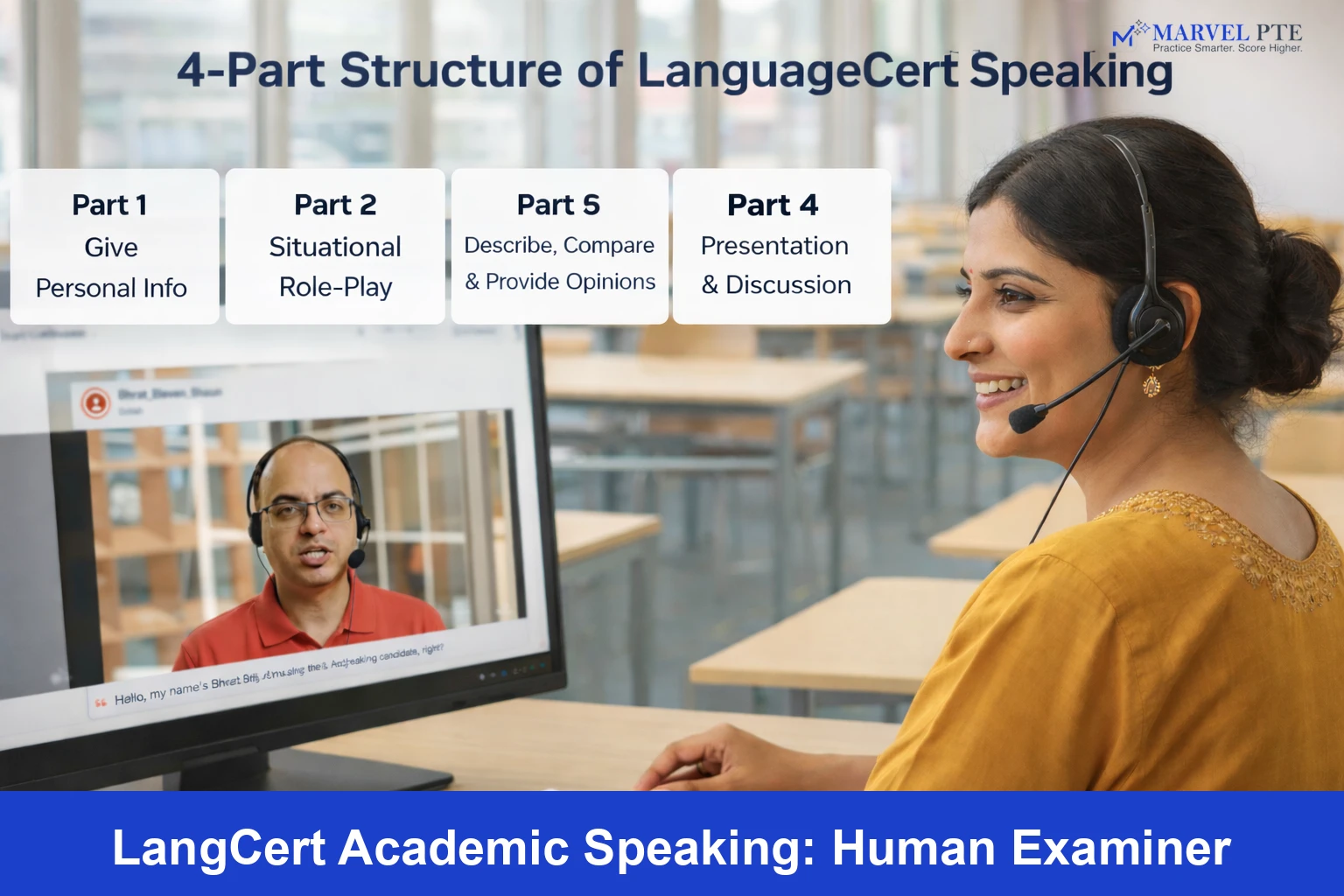
4 parts: Q&A, Role Play, Read Aloud, and Presentation.
Who scores LanguageCert Speaking?
Human examiners, not AI.
What is the Presentation speaking time?
Up to 2 minutes (plus 1 minute prep time).
What Speaking score is needed for Competent English?
70/100 for Australian visa purposes.
What Speaking score is needed for Proficient English?
82/100 (earns 10 PR points).
What Speaking score is needed for Superior English?
89/100 (earns 20 PR points).
Are pauses penalised in LanguageCert Speaking?
No. Human examiners understand natural hesitation.
Can Speaking be taken on a different day?
Yes, within a 14-day window from other sections.
How does LanguageCert differ from PTE Speaking?
Human examiner vs AI, more time to respond, no filler word penalties.
How long is the LanguageCert Speaking test?
Who scores the LanguageCert Speaking test?
How much time do you get for the Presentation task?
What is the Speaking score required for Proficient English (Australian PR)?
What is true about pauses in LanguageCert Speaking?
Technical setup:
Mental preparation:
For each part:
LanguageCert Speaking rewards clear communication over complex vocabulary. Approach it as a conversation with a supportive examiner, and you will find it more manageable than AI-scored alternatives.
Watch expert strategies for each speaking part with sample responses.

LanguageCert Academic Speaking Part 2 tests your ability to handle real conversations in academic settings. …
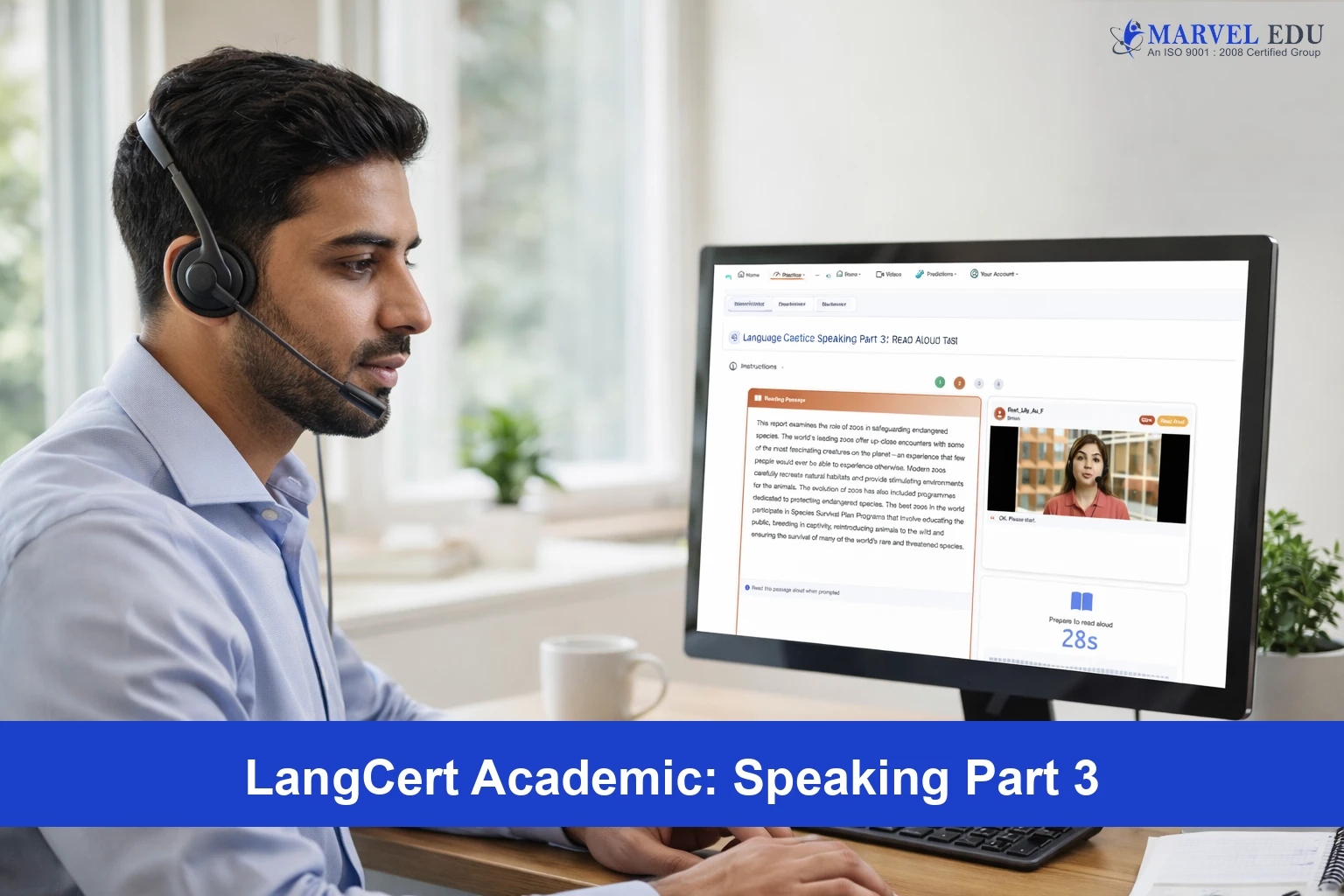
LanguageCert Academic Speaking Part 3 tests two skills in one task: reading aloud and expressing an opinion. …

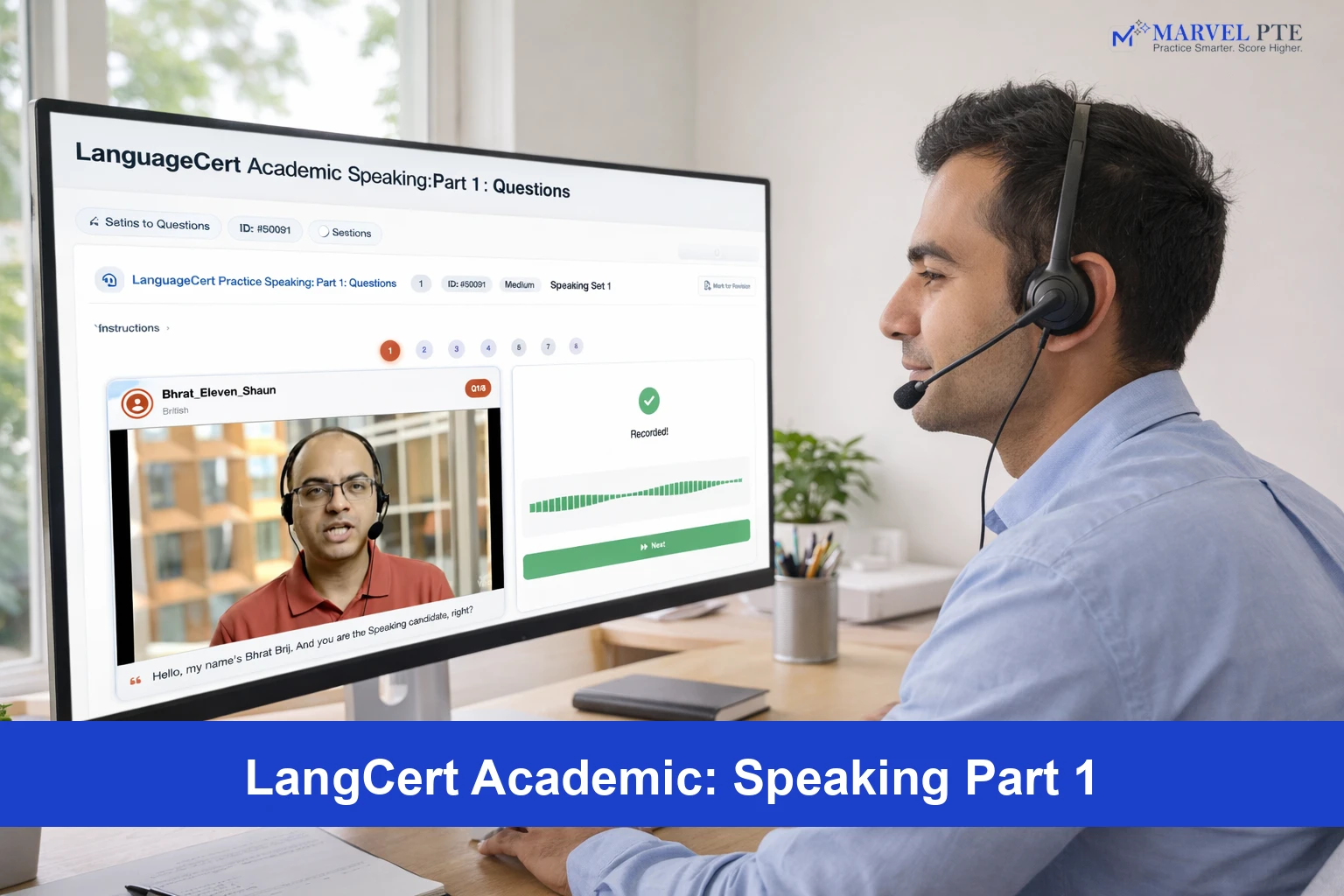
LanguageCert Academic Speaking Part 1 is the opening section of the speaking test, where the examiner asks you …
